By
Mahmud Shuaibu Ringim
The political journey of Governor Abba Kabir Yusuf is closely tied to, and inseparable from, the ideals and philosophy of the Kwankwasiyya Movement. Over the years, he has consistently acknowledged the immense influence of his mentor, benefactor, and political role model, Rabiu Musa Kwankwaso, whose guidance played a pivotal role in shaping his political career.
The long and eventful journey they have travelled together has been built on unwavering loyalty, mutual trust, deep respect, and honour. Undoubtedly, the role played by Kwankwaso in Abba Kabir Yusuf’s rise to political prominence cannot be erased by the passage of time.
Leadership, as we all know, comes with challenges of varying dimensions, particularly in a politically vibrant state like Kano.
The political rivalry between Aminu Kano and Abubakar Rimi during the Second Republic remains a notable chapter in the state’s political history. That disagreement led to the emergence of the Santsi and Tabo factions within the PRP. Nevertheless, the remarkable achievements recorded by the Rimi administration in education, rural development, and social services were not overshadowed by the internal political conflicts that plagued the party.
When the crisis eventually consumed the party structure, Rimi resigned as governor and joined the NPP, a party largely associated with the political bloc of Eastern Nigeria.
In recent times, it became evident that cracks had emerged within the NNPP. The disagreements that followed necessitated judicial intervention, culminating in legal battles that reached the Supreme Court.
Faced with a rapidly changing political environment, Governor Abba Kabir Yusuf was compelled to weigh his options carefully in order to safeguard the stability and continuity of his administration. Consequently, he chose to align with the APC, a platform he considered more secure and politically viable.
Unfortunately, that decision did not appear to enjoy the support of his political godfather. It marked a turning point in his relationship with the Kwankwasiyya Movement and further deepened existing tensions.
Despite these political developments, Governor Abba Kabir Yusuf has remained focused on fulfilling his campaign promises to the people of Kano State. His administration has concentrated on implementing policies and programmes designed to have a direct and positive impact on the lives of ordinary citizens.
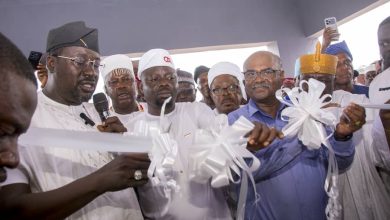
One of the most visible achievements of the administration has been the transformation of Kano’s urban landscape, particularly within the metropolitan area comprising eight local government councils. The reconstruction and expansion of major roads, coupled with the installation of solar-powered streetlights, have enhanced security and improved transportation. The completion of the Kofar Dan Agundi underpass and overhead bridge has significantly eased traffic congestion, while the Tal’udu flyover has further improved the movement of vehicles within the city.
The education sector has also received considerable attention. The government has ensured that fees associated with the pursuit of education at various levels are either heavily subsidised or completely free for Kano State indigenes, thereby expanding access to educational opportunities.
Similarly, primary healthcare and other critical sectors that directly affect human capital development have been prioritised through targeted interventions and increased government attention.
Governor Abba Kabir Yusuf has consistently maintained that many of his policies and programmes are inspired by the developmental template of the Kwankwasiyya Movement, which seeks to take Kano State to greater heights.
As the 2027 election cycle approaches, many supporters believe that Governor Abba Kabir Yusuf deserves another opportunity to consolidate on the gains already recorded and continue the transformation of Kano State. They argue that a second term would enable him to further elevate the state’s standing among its peers in the federation and strengthen its influence in national affairs.
As the most populous state in Nigeria, blessed with abundant human and natural resources, Kano requires sustained leadership capable of reviving closed and moribund industries. Industrial revitalisation remains essential for job creation, wealth generation, and economic prosperity.
A second term would provide Governor Abba Kabir Yusuf with the opportunity to deepen partnerships with industrialists and organisations such as the Manufacturers Association of Nigeria (MAN) in pursuit of policies aimed at reviving the manufacturing sector. Such efforts could include the establishment of a dedicated office or advisory mechanism focused specifically on industrial development and manufacturing growth.
The people of Kano are therefore called upon to support the continuation of policies and programmes that they believe are already transforming lives and advancing the principles of good governance associated with the Kwankwasiyya philosophy.
In view of his achievements, commitment to public service, and vision for the future of Kano State, Governor Abba Kabir Yusuf is, in the opinion of his supporters, eminently qualified for a second term to continue the work he has begun.
Mahmud Shuaibu Ringim
mahmudshuaibu44@gmail.com