By Soknan Shedul
In the unforgiving theater of realpolitik, history rarely bows to the merely “obedient”; it yields to the relentlessly strategic.
Niccolò Machiavelli never penned those exact words, yet the sentiment remains the unspoken constitution of Nigerian politics.
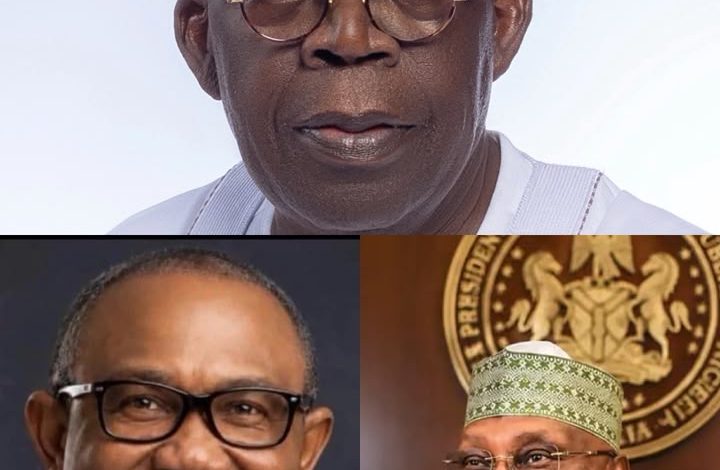
As the country marches toward the 2027 presidential election, the unwritten moral imperative of national zoning—demanding that power remain in the South for eight years to preserve the fragile fabric of the Nigerian union—narrows the defining contest to two Southern heavyweights: incumbent President Bola Ahmed Tinubu and Peter Obi.
Vice President Atiku Abubakar is conspicuously absent from this equation. Having repeatedly breached the zoning consensus, his ambition stands outside the national mood. A political miscalculation the Nigerian electorate has consistently punished at the ballot box.
Stripped of social media noise, 2027 is a collision between Obi’s grassroots energy and Tinubu’s institutionalized mastery of the political chessboard. To see where the power pendulum is swinging, one must examine the cold mechanics of Nigerian power.
THE LANDLORD VS.THE TENANT
In Nigerian politics, a presidential ambition without an enduring institutional home is like a roof without pillars. Here, the contrast between the two contenders could not be sharper.
Peter Obi’s political journey has been defined by perpetual migration. Moving from APGA to the PDP, to the Labour Party in 2023, a brief coalition stint in the ADC, and finally landing in the Nigeria Democratic Congress (NDC), Obi has treated political parties as disposable transit vehicles. Rather than staying to build and fund a structure from the ward level up, he has repeatedly jumped ship at the first sign of internal friction. Even now, reports of brewing tension between his camp and the original founders of the NDC over campaign direction underscore the vulnerability of a tenant operating on a borrowed platform.
President Bola Tinubu represents the exact opposite: a four-decade study in deliberate political architecture.
From his days in the trenches of NADECO fighting military dictatorship, through the AD and ACN, to engineering the historic merger that birthed the ruling APC, Tinubu has never abandoned a house. He builds empires. As the undisputed political landlord, his government today is populated by loyalists he mentored and weaned over thirty years.
Entering 2027, Tinubu commands a formidable APC spread and an overwhelming bloc of state governors—a ground-level logistical machine no last-minute opposition vehicle can easily match
BUILDING NETWORKS VS. WALKING ALONE.
Machiavelli observed that a leader’s strength lies in commanding fierce loyalty from his allies. Tinubu’s political leverage stems from his transactional genius and ability to turn former adversaries into staunch defenders, constructing cross-party coalitions across the federation.
Conversely, Obi’s greatest vulnerability lies in his relational deficit. Despite commanding intense loyalty from his street-level base, he has struggled to retain political peers.
Many of the aides and benefactors who stood by him as Governor of Anambra State and scores of elected National Assembly members from the same Labor Party he ran under in 2023 have long parted ways with him.
More tellingly, Obi enters 2027 without the open backing of the sitting governors of his own South-East region. In a political culture where elite consensus and local gatekeepers matter, his inability to keep his immediate political family intact is a glaring liability.
SWEET PROMISES VS. HARD REALITIES.
On the campaign trail, Obi leans heavily on personal frugality and moral appeals. Yet critics frequently point to a lack of a rigid manifesto and a habit of political double-speaking—such as pledging to serve a single four-year term to appease zoning sentiments while promising multi-decade structural overhauls.
Tinubu, however, faces a steep communication hurdle of his own. As the incumbent, he must defend the immediate sting of his bold economic reforms and why eggs were broken.
Fuel subsidy removal, currency devaluation, and sweeping tax overhauls have tested the patience of everyday Nigerians grappling with soaring living costs.
Tinubu’s gamble is that his macro-economic restructuring will begin yielding visible relief before ballots are cast, convincing voters that short-term pain was necessary for long-term stability.
THE BATTLEGROUNDS THAT MATTER.
The 2027 map is shaping up into clear battlegrounds. While Obi retains grassroots popularity in the South-East, the region’s political establishment is actively mobilizing for Tinubu, calculating that staying inside the mainstream power structure until 2031 is the safest route to a future South-East presidency.
By teaming up with Rabiu Kwankwaso on the NDC ticket, Obi hopes to pierce Tinubu’s North-West stronghold.
Yet Tinubu’s counter-weight is formidable. A united front of APC Northern governors working in total unity, paired with a firm grip on his South-West base and aggressive inroads into the South-South.
Obi continues to sway frustrated urban youths and digital natives. However, Nigerian elections are rarely won on social media timelines; they are decided in rural wards where party structures and grassroots mobilization hold absolute sway.
OUR POLITICAL REALITY
When all pros and cons are weighed on the scale of Nigerian realpolitik, the power pendulum tilts unmistakably toward Bola Ahmed Tinubu 2027 presidency.
Peter Obi speaks to what millions of Nigerians wish their politics could be — idealistic and driven by grassroots passion.
Bola Tinubu, however, embodies what Nigerian politics actually is: a grueling game of structure, loyalty, and institutional control.
Until opposition figures master the art of becoming political landlords rather than nomadic tenants every election cycle, the seasoned strategist will continue to outmaneuver the “Obidient.”
Shedul is a
Media Specialist and
National Coordinator of the Congress of Minorities of Northern Nigeria (CMNN)….writes from Abuja soknanshedulishaku@gmail.com