By Shu’aibu Usman Leman
For decades, we have lamented the deplorable working conditions of Nigerian journalists. We have documented the crisis in communiqués, debated it at National Executive Council meetings of the Nigeria Union of Journalists (NUJ), lobbied governors, ministers and media proprietors, and revisited the same grievances every World Press Freedom Day and International Day to End Impunity for Crimes against Journalists. We have appealed, negotiated and pleaded, hoping that sustained moral persuasion would eventually yield better pay, decent welfare and real job security.
Yet, for the vast majority of journalists across the country, almost nothing has changed. Our advocacy has not been misguided, nor have our demands been misplaced; rather, moral persuasion alone has hit a hard wall in the absence of binding legal and institutional enforcement. For too long, employers have treated journalists’ welfare as a matter of personal goodwill rather than a non-negotiable right, allowing decent working conditions to be granted or withdrawn at whim—while public officials comfortably dismiss an existential threat to democracy as routine trade union noise.
The human cost of this failure plays out in our newsrooms every day. A reporter may work eight straight months without seeing a kobo in salary, while a correspondent may be sent to cover a bomb blast without life insurance or basic protective gear. A cameraman may labour for years without a formal letter of appointment, even as bright Mass Communication graduates routinely earn slightly more than the cleaners in the very media houses that proudly parade them on air and in print. These are not isolated administrative slips; they reflect an entrenched culture of exploitation. There is a glaring hypocrisy in a profession that demands accountability from public officials every morning while refusing to uphold basic labour laws inside its own walls.
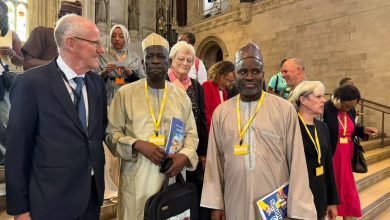
I write from painful personal experience. During my years at the national secretariat of the NUJ, I handled cases that stay with you for life—journalists brutalised on duty who discovered they had zero financial backing to pay for hospital treatment. I watched dedicated colleagues die on assignment, leaving behind destitute families with neither insurance payouts nor meaningful institutional support. More quietly, I saw how chronic financial hardship chips away at editorial integrity. When salaries are withheld, debts pile up and family responsibilities become overwhelming, even the most principled reporter faces immense pressure. Too often, hunger becomes a more powerful editor than newsroom policy. Financial distress can never excuse unethical conduct, of course, yet we must face the reality that a journalist struggling to feed their family is dangerously vulnerable to compromise. Integrity demands personal character, yes, but employers and governments must also build an environment where journalists can do their work with dignity and independence.
In 2024, while defending his administration’s decision to approve a 300 per cent salary increase for judicial officers, President Bola Ahmed Tinubu rightly argued that Nigeria cannot expect judges to uphold the scales of justice on empty pockets. That logic is sound. Fair pay is vital to protecting the independence of the judiciary. Yet it raises an urgent question about the fourth estate. If we cannot expect a hungry judge to dispense justice fairly, how can we expect a hungry journalist to report the truth, defend the public interest and hold power to account? A judge upholds justice in the courtroom; a journalist enforces accountability in the public square. Both are pillars of our democracy, and when poverty and neglect weaken either, the entire country pays the price.
Nowhere is this institutional neglect more obvious than in government-owned media. At the federal level, outfits like the Nigerian Television Authority (NTA), the Federal Radio Corporation of Nigeria (FRCN), the News Agency of Nigeria (NAN) and the Voice of Nigeria (VON)—alongside state-owned newspapers, radio and television stations across the federation—are vital national assets. Their reporters cover the Presidency, the National and State Assemblies, the courts, elections, insurgencies and communal crises. Yet many take home wages that can barely sustain a household, while staff in several state stations endure months of unpaid salary arrears. Worse still, many work with obsolete equipment and zero operational imprest, forcing reporters to buy their own mobile data, fuel official vehicles and pay for transport out of meagre personal earnings. A journalist’s pocket should never double as an employer’s operational budget.
Predictably, this hostile environment has driven a steady exodus of experienced hands from public media. Decades ago, the NTA and VON, FRCN were the gold standard of broadcasting in Nigeria and across Africa, while state stations served as vibrant nurseries for young talent. Today, seasoned professionals are walking away in droves for private media houses, NGOs, public relations firms, political appointments and opportunities abroad. We should not be quick to accuse them of abandoning public service; many have simply reached a point where they can no longer justify staying in institutions that refuse to value their experience or reward their work. Nigeria is losing its best media minds because the basic conditions needed to keep them simply do not exist.
While the private sector suffers from similar welfare failures, fairness requires us to acknowledge the harsh economic realities squeezing media proprietors. Soaring newsprint and printing costs, punishing electricity tariffs, foreign exchange volatility, shrinking advertising revenue, shifting audience habits and the dominance of global tech platforms have put print, broadcast and online operators under severe strain. Even so, economic headwinds must never become a convenient excuse for exploiting workers. Proprietors need to take a hard look at their own priorities. When a media house claims it cannot pay salaries, how does it mysteriously find money for luxury executive SUVs, elaborate ceremonies and ambitious expansion projects? Nobody is suggesting that every media house is flush with cash or that every capital project is wasteful, but workers’ welfare is not an optional luxury—it is a primary business obligation.
To break this cycle, Nigeria should seriously consider setting up a Nigerian Media Industry Rescue and Sustainability Fund (NMIRSF) to provide targeted support to struggling but viable media organisations. The Newspaper Proprietors’ Association of Nigeria (NPAN) and the Broadcasting Organisations of Nigeria (BON) should take the lead in drafting a solid proposal for the Federal Government and the National Assembly, working closely with the NUJ, the Nigerian Guild of Editors (NGE) and other industry stakeholders. Channelled through the Bank of Industry and allied institutions, this fund should offer affordable financing to help qualifying outlets replace obsolete equipment, expand production capacity, switch to renewable energy and speed up digital transformation, paired with targeted tax breaks on essential production inputs. Crucially, the scheme should include temporary salary-support facilities to help distressed but viable houses clear verified wage arrears, alongside a sector-wide insurance pool offering affordable health, life and occupational accident cover—especially for journalists deployed to conflict zones and high-risk beats.
One non-negotiable rule must govern this entire effort, that no bailout without strict accountability and a binding commitment to workers’ welfare. Any organisation drawing from public-backed support must guarantee minimum labour standards, including written contracts, regular salary payments and comprehensive insurance cover. Outlets carrying wage arrears must submit verifiable repayment plans, while recipients of salary support must undergo independent audits under transparent eligibility rules to ensure funds go strictly where intended. Public intervention must never turn into a political slush fund to reward compliant publishers or buy editorial silence. A free press cannot survive as a financial dependent of the very government it is constitutionally mandated to scrutinise.
Money alone will not fix the industry unless it is backed by a comprehensive Media Workers’ Protection Framework setting enforceable legal baselines for pay, workplace safety, insurance and job security. Every journalist must hold a formal employment contract spelling out duties, entitlements and conditions of service, and salaries must be paid as and when due. Health, life and hazard insurance must become standard, mandatory terms of employment, particularly for correspondents sent into volatile terrain. Above all, no journalist should ever be sacked for demanding earned wages or insisting on contractual rights, nor suffer victimisation for reporting facts that inconvenience an employer, politician or public official. The NUJ, NPAN, BON, the NGE must jointly push both the Rescue Fund and the Protection Framework before the National Assembly—recognising that rescuing media businesses without protecting workers is pointless, just as enforcing better welfare without addressing industry survival is unsustainable.
Before charging into new legislative battles, however, the NUJ must also look inward and open its own archives. Past leaderships of the union produced sound memoranda, collective bargaining agreements and policy blueprints on pay, safety and social protection that were left to gather dust due to weak follow-up or shifting priorities. The current national leadership should empanel a dedicated team of seasoned veteran journalists and lawyers to audit these records, check the status of old agreements and revive proposals that still hold water. Doing so will preserve institutional memory, stop the union from reinventing the wheel and give fresh advocacy a solid foundation.
The urgency of these reforms cannot be overstated as Nigeria marches toward the 2027 general elections. In the coming months, journalists will be expected to scrutinise parties and candidates, expose electoral malpractice, counter coordinated disinformation and report from communities gripped by insecurity and political tension. A credible election demands a credible press, and credible journalism cannot run on empty stomachs, borrowed transport fares and uninsured risks. Government must move beyond hollow annual speeches and recognise that true press freedom is about far more than the absence of censorship, intimidation and arbitrary arrest; it must also mean the practical freedom to work without the constant fear of hunger, wage theft and economic coercion.
Having spent much of my working life in journalism and union administration, I understand the complexities of media ownership, collective bargaining and industry economics. Constructive dialogue remains essential, yet dialogue without enforceable commitments is just a polite way of postponing action. Our posture must now be clear. We are no longer begging proprietors for favours or endlessly appealing to the conscience of public officials; we are demanding decent work as a fundamental right, a sustainable media industry as a democratic necessity, and strict accountability for any public support extended to the sector.
To media owners, the message is simple, pay your staff, issue written contracts, provide insurance and respect their professional rights. To the Federal and state governments, defending democracy means protecting the citizens who inform the public and hold power to account. NPAN and BON must step forward to champion a credible national rescue plan alongside the NUJ, which must now shift from repetitive resolutions to enforceable action. Finally, to Nigerian journalists themselves, recognise your worth, stand up for your rights and refuse to normalise exploitation in the name of passion. Journalism is a skilled profession, not an act of charity—and Nigeria cannot build a resilient democracy on the backs of impoverished reporters asking not for luxury, but for non-negotiable dignity.
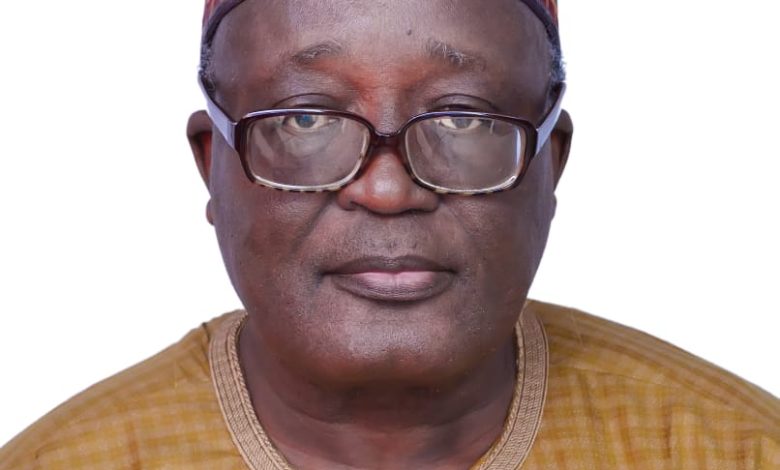
Leman is a former National Secretary of the Nigeria Union of Journalists (NUJ).