Commissioner for Information and Stakeholders Advocate Against Drug Abuse, Jungle Justice, and Push for 35% Women Affirmative Action at NCWS Leadership Training

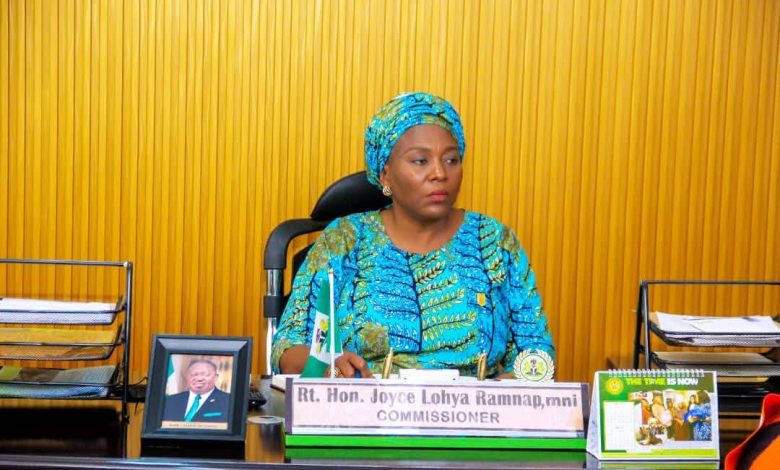
The Plateau State Commissioner for Information and Communication, Joyce Ramnap, has called for urgent collective action against drug and substance abuse and jungle justice, while reaffirming the government’s support for the 35% women affirmative action in Nigeria.
The Commissioner made this known while presenting a paper at the Women Leadership Training organized by the National Council of Women Societies (NCWS) in Jos.
This contained in a statement issued by Director, Public Relations and Protocol,
Ministry of Information and Communication,Mary Rwang.
Ramnap stressed that drug abuse among youths is fueling insecurity, crime, and family breakdown, urging parents, community leaders, religious groups, and the media to rise to the challenge.
She also condemned jungle justice, describing it as unlawful, dehumanizing, and a violation of the rule of law.
Highlighting the role of women in governance, the Information Commissioner reaffirmed Plateau State’s commitment to the 35% women affirmative action, noting that women have the competence and capacity to lead at all levels of society.
Other speakers at the event included the Chairperson of the Gender and Equal Opportunity Commission, Hon. Olivia Dazyem, who emphasized the importance of legal frameworks that protect women’s rights and ensure inclusivity in governance.
She called for effective enforcement of the Gender and Equal Opportunity Law to guarantee equity and fairness.
The Commissioner for Women Affairs and Social Development, Caroline Dafur, noted that women remain critical partners in development and urged for more collaboration between government institutions, civil society, and women’s groups to dismantle barriers that hinder women’s advancement in politics, business, and leadership.
The President of NCWS Plateau State Chapter, Celina Ali, expressed appreciation to all speakers and participants, noting that the training was designed to build the capacity of women leaders to champion peace, inclusivity, and sustainable development in their communities.
The event brought together women leaders from across the state who brainstormed on strategies to enhance women’s participation in governance while addressing pressing social challenges.