The breeze of Nigeria’s 2027 election season has begun to blow across the country, and political activities are gradually gathering momentum.
The ruling All Progressives Congress (APC), has already fielded President Bola Ahmed Tinubu as its candidate for a second term..
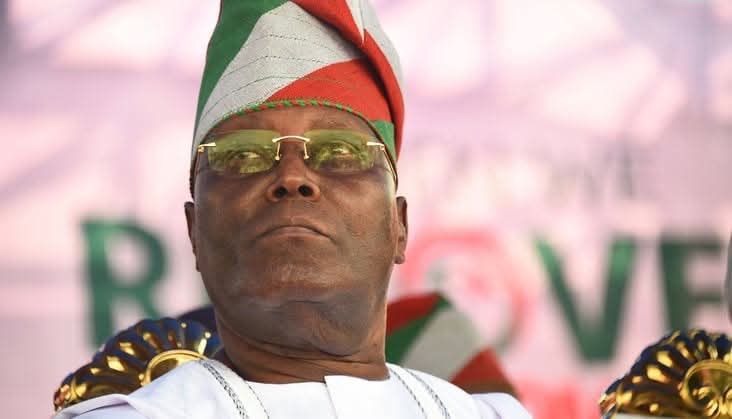
The African Democratic Congress (ADC) has also emerged as a major political platform, with Atiku Abubakar, a well-known figure in Nigeria’s political arena, as its presidential candidate. Atiku’s political career at the national level dates back to 1999, when he served as Vice President under the administration of President Olusegun Obasanjo.
President Tinubu will present his administration’s achievements over the last three years to Nigerians, who will ultimately assess whether its policies have improved living standards, reduced the cost of living and enhanced security across the country.
On the other hand, Atiku Abubakar is likely to draw extensively from the record of the Obasanjo administration, in which he served as Vice President from 1999 to 2007, notwithstanding the well-documented disagreements that characterised his relationship with his principal towards the end of their tenure.
One of the notable achievements of the Obasanjo administration was the debt relief secured for Nigeria from the Paris Club and London Club of creditors. This substantially reduced the country’s external debt burden and created additional fiscal space for the government.
The administration also presided over a period of relative macroeconomic stability and actively promoted Nigeria as a destination for foreign direct investment. It equally encouraged indigenous investment, with prominent Nigerian entrepreneurs and businesses, including the Dangote Group and Michael Otedola’s business interests, expanding their activities across various sectors of the economy.
Undoubtedly, Atiku Abubakar’s experience in government and his understanding of economic management are closely associated with the policies and experiences of the Obasanjo administration, in which he served as Vice President. His supporters will argue that this experience provides him with an important foundation for confronting Nigeria’s present economic challenges and pursuing sustainable growth and prosperity.
The choice of Muhammad Hayatudeen as Chairman of the Policy Committee of the campaign team also speaks to the emphasis being placed on economic policy and institutional reform.
Muhammad Hayatudeen is a respected figure in Nigeria’s financial sector, with experience spanning development finance and commercial banking. His involvement in institutions such as the New Nigeria Development Company and FSB International Bank, among others, reflects a career associated with financial management, institutional development and the restructuring of businesses.
With Atiku Abubakar in the Aso Rock Villa, his supporters envisage a significant turnaround in Nigeria’s economic fortunes.
A major priority would be the revitalisation of Nigeria’s manufacturing sector, which remains critical to employment generation, wealth creation, industrial development and economic diversification. Such an agenda would require creating an enabling environment for the revival of closed and moribund industries while encouraging new investments in productive sectors.
The proposed re-industrialisation of Nigeria would also seek to reduce the country’s excessive dependence on imported goods, including textiles, petroleum products and other essential commodities. This would require a coordinated strategy involving government institutions, the Central Bank of Nigeria, financial institutions and private-sector investors.
The experience of previous administrations demonstrates that government-backed financing and targeted economic interventions can play a role in supporting strategic industries. However, such interventions must be transparent, professionally managed and designed to achieve sustainable economic outcomes rather than merely providing temporary relief.
The economic policies of the Tinubu administration would also be subjected to a comprehensive review, with the national interest placed at the centre of any new policy direction.
The sudden removal of the petroleum subsidy, for instance, has had far-reaching consequences for households and businesses. While the government has defended the policy as necessary for fiscal sustainability and economic reform, its immediate impact on inflation, transportation costs and household purchasing power has generated considerable hardship among Nigerians.
An Atiku Abubakar administration, as envisaged by his supporters, would therefore be expected to hit the ground running with policies aimed at stabilising the economy, restoring productive capacity and protecting vulnerable citizens from the effects of economic reforms.
Nigeria needs an economic agenda that goes beyond political rhetoric. It requires deliberate investment in manufacturing, agriculture, infrastructure, human capital and energy, while creating the conditions necessary for the private sector to thrive.
The ultimate test of any government is not the number of policies it announces, but the extent to which those policies translate into jobs, affordable living conditions, economic opportunities and improved quality of life for ordinary Nigerians.
For Atiku Abubakar, the 2027 election will therefore be more than a contest for political power. It will be an opportunity to present a clear alternative economic vision and convince Nigerians that his experience, policies and leadership can place the country on a sustainable path to prosperity.
Mahmud Shuaibu Ringim
mahmudshuaibu44@gmail.com