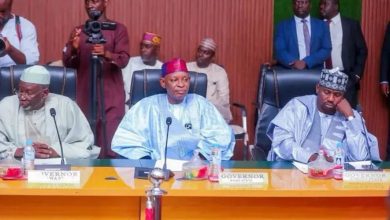
Thirty-seven young Nigerians arrested during a crackdown on suspected illegal mining at M.I. Wushishi/Lukoto have died in the custody of the Nigeria Security and Civil Defence Corps (NSCDC). The Niger State Government has ordered inquiries and autopsies, the Police and other security agencies have opened investigations, and the State Commandant of the NSCDC has been suspended.
That is procedure. It is not yet the truth.
The deceased were not arrested as bandits or terrorists. Indications are that many were artisanal miners struggling to earn a living to feed their families and support their parents, in a sector the state has failed to regularise.
Who ordered the raid? Who authorised the detention? And under what conditions were 37 people held until they died? These are some of the questions demanding answers.
Until forensic findings are made public, claims of disease outbreak, poisoning, overcrowding and suffocation remain allegations that must be scientifically tested, not assumed.
But the inquiry cannot stop at the walls of the detention facility. The mining site itself must be investigated.
There are persistent allegations that powerful and well-connected interests in the state have long sought to take over the M.I. Wushishi ground because of its huge mineral potential. Those claims are yet to be proven, but they are central to this case.
In Minna, the whispers are even more pointed. There is street talk alleging that the State Governor has a personal interest in taking over the mining location, in a manner reminiscent of the Zamfara experience, with a proposal allegedly in the offing to relocate residents of M.I. Wushishi under the guise of environmental cleanup.
It is also alleged in local circles, as though it were common knowledge rather than documented fact, that the Governor has interests in many gold sites in the state and that a weekly gold return is made to him – a boast he is alleged to have made before associates. These are grave assertions. They are not proof. But they are precisely the kind of rumours that will continue to hang over the 37 dead if the inquiry is limited to cells and commandants.
Because the allegations are weighty, they require on-the-record answers:
Who holds interest in the mining rights at M.I. Wushishi? Who has applied for licences or concessions over the location? Were there earlier attempts or proposals to take over the site? Was any commercial interest or application pending before the arrests? Did any relocation or “cleanup” plan for M.I. Wushishi exist before the raid? And is any such interest connected to the operation?
Let the documents speak. This is also a case for the Code of Conduct Bureau and its Tribunal to examine asset declarations, licence files, task force minutes and gold-market records.
Gossip in Minna is not a substitute for evidence, just as mining in Niger State is not an orphan file. Mining licences are federal, but administration on the ground is state-driven.
The Director-General of Mineral Resources in Niger State is Mr. Ademola Banjo, appointed in March 2024 by the Governor. Checks confirm he is a banker and businessman, formerly with First City Monument Bank. His brief is not to grant mining leases, but to profile operators and sit on enforcement structures, including the 2024 task force on illegal mining. That architecture raises more questions than it answers.
That makes the silence on output indefensible. Who keeps the statistics on gold leaving Niger State, whether through licensed concessions or informal routes? Who benefits when a rich ground is cleared?
No one should hide under the cover of informal mining to escape the law; proven offences must be taken to court. But being arrested is not a licence to die, and struggling to earn a living from the pits is not the same as waging war against the state.
The inquiry must publicly disclose the decision of the State Security Council, the officer who authorised the raid, the unit that executed it, the conditions of detention, and the official record of what the disputed ground has yielded, including who stands to benefit when it is cleared.
That accounting is due to the 37 families. It is also due to Niger State and every Nigerian citizen.
Ibrahim Maigida Shehu, Esq
Writing from Maitumbi, Minna.