
Budget
By Aminu Garko
Kano. The Kano State’s Government 2026 budget has been approved at N1.477 trillion, a 7.42 per cent increase from the initial proposal.
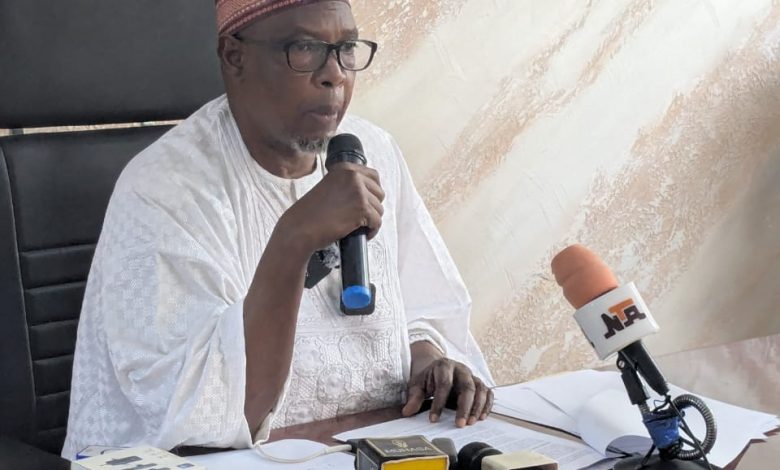
The News Agency of Nigeria ( NAN) reports that the Commissioner for Planning and Budget, Musa Shanono, said on Friday that the budget focused on infrastructure, inclusive growth, and sustainable development.
The revenue projections included N1.048 trillion recurrent revenue and N327.19 billion capital receipts.
The budget allocated N432.4 billion to education, N429.72 billion for recurrent expenditure, and N1.048 trillion for capital expenditure.
The budget is 51 per cent higher than 2025’s, reflecting a shift towards infrastructure development and long-term investments.
He explained that the budget, tagged “Budget of Infrastructure, Inclusive Growth and Sustainable Development,” was designed to consolidate ongoing reforms and accelerate human capital and economic development across critical sectors of the state.
According to him, the initial proposal of N1.368 trillion was presented by Gov. Abba Yusuf to the State House of Assembly on Nov. 19, 2025.
Following legislative scrutiny, consultations and public hearings, the appropriation bill was passed on Dec. 31, 2025, and assented to by the governor on Jan. 1, 2026.
The approved figure increased by N109.7 billion after legislative adjustments.
A breakdown of the revenue projections showed that total recurrent revenue for 2026 was estimated at N1.048 trillion.
This comprised N138.4 billion as Internally Generated Revenue (IGR) and N909.9 billion expected from the Federation Account Allocation Committee (FAAC), including statutory allocation, Value Added Tax and other receipts.
The commissioner said that the recurrent revenue projection represented a 70 per cent increase over the 2025 figure, while the IGR component alone reflected a 61 per cent rise.
He attributed the development to institutional reforms aimed at enhancing transparency and prudence in revenue generation.
Capital receipts for the fiscal year were projected at N327.19 billion, with an additional treasury opening balance of N102.26 billion brought forward into the 2026 fiscal cycle.
On the expenditure side, total recurrent expenditure was put at N429.72 billion, while capital expenditure accounts for N1.048 trillion.
This established a capital-to-recurrent ratio of 70:30, a structure the commissioner described as a deliberate policy shift toward infrastructure development and long-term investments.
The education sector received the largest allocation, with N432.4 billion representing 29.4 per cent of the total budget, surpassing the 26 per cent benchmark recommended by UNESCO.
The allocation covered key programmes such as the State Free Education Programme, funding for bilingual and special schools, and other interventions aimed at improving teaching and learning outcomes across the state.
Shanono said the substantial investments in education underscored the administration’s commitment to revitalising the sector and restoring public confidence in the state’s education system.
He added that other sectors would also benefit from significant capital investments in line with the administration’s development priorities.
The commissioner reaffirmed the government’s resolve to ensure prudent implementation of the budget and called for continued support from the stakeholders, including the media and civil society, to ensure transparency and accountability throughout the fiscal year.


