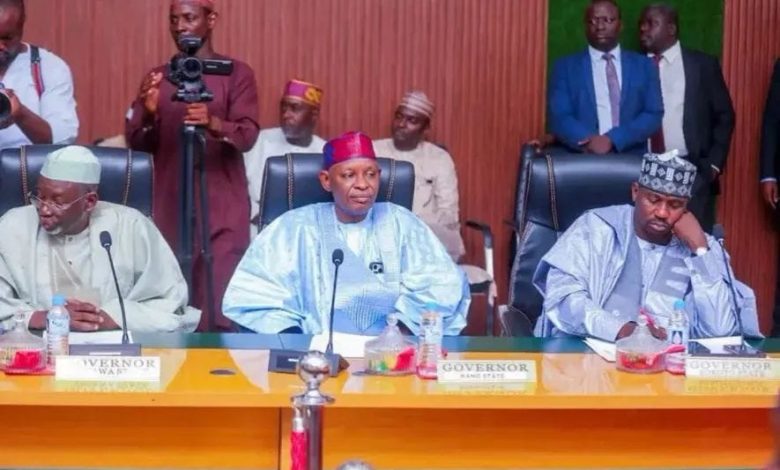
The inauguration of the Northern Nigeria Security Fund by the Northern Governors’ Forum, under the leadership of retired General Martin Luther Agwai and former Minister of Defence, Alhaji Mahmud Yayale Ahmed, could not have come at a more appropriate time. Northern Nigeria has endured persistent security challenges ranging from the Boko Haram insurgency in the North-East to banditry in the North-West and recurring violent conflicts across the North-Central region.
The composition of the Fund, which brings together respected personalities with distinguished records of public service, demonstrates the commitment of the Northern Governors’ Forum to addressing insecurity with seriousness, professionalism, and accountability. This initiative deserves commendation.
However, while strengthening the region’s security architecture is necessary, it is equally important to confront the underlying causes of insecurity. One of the most significant drivers is the alarming level of unemployment among the region’s growing population of skilled and unskilled young people. Every year, thousands of graduates from tertiary institutions and secondary schools enter the labour market with limited opportunities for gainful employment.
This challenge is closely linked to the collapse of many manufacturing industries that once served as the backbone of Northern Nigeria’s economy. These industries not only created employment but also generated wealth, stimulated local commerce, and contributed significantly to government revenue and national economic growth. Their decline has left many communities economically vulnerable, creating conditions that criminal elements readily exploit.
History has shown that governments can intervene strategically to protect key industries during periods of economic distress. During the global financial crisis, the administration of President George W. Bush provided critical support to major American automobile manufacturers, including Chrysler and General Motors, to prevent their collapse and preserve thousands of jobs. Similarly, during his tenure as Governor of the Central Bank of Nigeria, His Highness, the Emir of Kano, Muhammadu Sanusi II, introduced banking sector reforms, including refinancing and restructuring measures, which helped stabilise the financial system and restore public confidence.
The Northern Governors’ Forum should adopt a similar approach by establishing an Industrial Development Fund (IDF). Such a fund should be mandated to facilitate the revival of closed and moribund industries across Northern Nigeria while encouraging new industrial investments. A clear and investor-friendly policy framework would send a strong signal to both domestic and international investors that the region is committed to industrial growth and economic transformation.
The proposed Industrial Development Fund should work closely with established development finance institutions such as the Bank of Industry (BOI) and the Bank of Agriculture (BOA) to bridge the financing gap confronting struggling manufacturing enterprises. Likewise, the Central Bank of Nigeria should consider revisiting its refinancing and restructuring initiatives to provide targeted support for viable manufacturing businesses. Revitalising the manufacturing sector remains one of the most effective strategies for reducing unemployment and strengthening the nation’s security architecture.
The New Nigeria Development Company (NNDC) is well positioned to champion this industrial renaissance. It should lead efforts to revive iconic industries such as KTL, Arewa Textiles, Turners Building Products in Kaduna, and many other dormant manufacturing enterprises across the region.
To achieve this objective, the NNDC itself must be revitalised and adequately capitalised to fulfil its original mandate of pioneering, facilitating, participating in, and promoting rapid industrial development throughout Northern Nigeria.
Furthermore, the NNDC should actively pursue partnerships with international financial institutions and development agencies, including the Islamic Development Bank, the Gulf Cooperation Council, the United Nations Development Programme (UNDP), and the United Nations Industrial Development Organization (UNIDO). Such collaborations have yielded positive results in the past, particularly during the leadership of Mohammed Hayatudeen, through capacity building and institutional development initiatives.
Northern Nigeria possesses enormous comparative advantages in agriculture and solid minerals. The region is richly endowed with valuable resources such as lithium, gold, uranium, silica sand, limestone, clay, and other strategic minerals that can support the establishment of value-added industries. Harnessing these resources through industrialisation would create employment, diversify the regional economy, and expand export opportunities.
The NNDC remains the most suitable institution to coordinate this transformation, much like the Odu’a Investment Company has played a strategic role in the economic development of South-West Nigeria. With the right leadership, adequate funding, and strong political commitment, the NNDC can once again become the engine of Northern Nigeria’s industrial and economic revival.
The Northern Governors’ Forum should therefore take decisive steps to strengthen and reposition this historic institution, established under the visionary leadership of the late Sir Ahmadu Bello, the Sardauna of Sokoto. Reviving the NNDC and promoting re-industrialisation would not only stimulate economic growth but also provide a lasting solution to unemployment, poverty, and insecurity across Northern Nigeria.
Mahmud Shuaibu Ringim
HALIM Consulting Ltd
mahmudshuaibu44@gmail.com